John 20 is the end of what we call the gospel proper — the close of the primary story of Jesus’s life on earth. There is one more chapter after this, but John himself signals that it functions as an epilogue, recording a few events that fall outside the main narrative arc. So this morning, as we close chapter twenty, we are truly reaching the culmination of John’s gospel. And in the final verses of this chapter, John gives us the clearest possible statement of why he wrote it at all.
Verses thirty and thirty-one read: “And many other signs truly did Jesus in the presence of his disciples, which are not written in this book. But these are written, that ye might believe that Jesus is the Christ, the Son of God; and that believing ye might have life through his name.” John’s singular purpose for writing this gospel is that your life would be changed by the reality that Jesus truly is the Son of God. Every sermon, every lesson, every sign and miracle recorded in these twenty chapters has been driving toward this one primary point: Jesus is the Christ, the Son of God. All the evidence points to the reality that he is exactly who he claims to be, and because he is who he says he is, your life can be transformed.
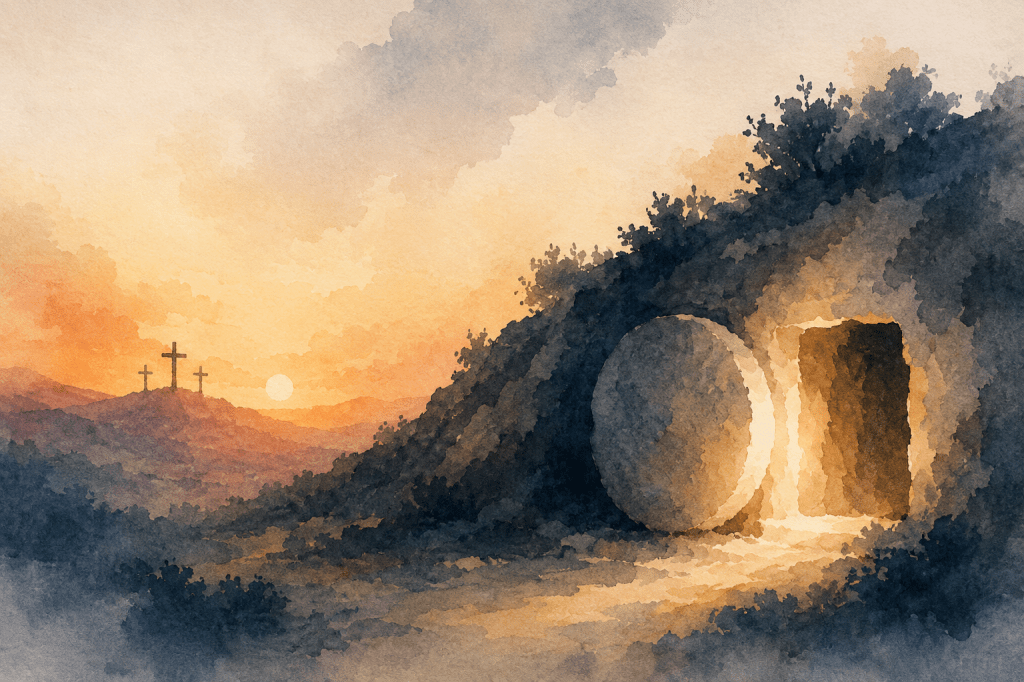
Chapter twenty testifies to exactly that transformation. When the chapter opens, we find a very broken, very disturbed group of disciples — people who had followed Jesus throughout his ministry, who loved him and trusted him and genuinely believed he was the one they had been waiting for. And where do they find their Messiah when the chapter begins? Lying in a tomb. Just a few days before, they had watched as he was tried unjustly, brutally tortured, and nailed to a Roman cross, made a public spectacle before the very nation he was supposed to lead. Now the disciples are huddled behind locked doors, afraid they might be next, grieving the loss of the one to whom they had devoted the last three years of their lives. They are disturbed, they are distraught, and they have no idea where to go from here.
But that is not how the chapter ends. By the time we reach the final verses of chapter twenty, those same broken, distraught people walk away with joy, with confidence, with renewed faith, and with a power they simply did not possess when the chapter began. And what I want you to carry out of this service is the conviction that the same risen Christ who transformed them has the same power to transform you. This morning we are going to meet four witnesses to the resurrection of Christ — four people whose lives were dramatically changed by what they discovered. Each of them was experiencing a different kind of brokenness, and I suspect you will be able to identify with at least one of them, if not all four.
Mary Magdalene: The Sorrowful
The first witness we meet is Mary Magdalene. Verse one tells us: “The first day of the week cometh Mary Magdalene early, when it was yet dark, unto the sepulchre, and seeth the stone taken away from the sepulchre. Then she runneth, and cometh to Simon Peter, and to the other disciple, whom Jesus loved, and saith unto them, They have taken away the Lord out of the sepulchre, and we know not where they have laid him.”
Notice that Mary is the very first person to return to the tomb, and she arrives before the sun has fully risen. In the Bible, going out before the light consistently signals urgency and devotion — and that is exactly what we see in Mary. She has come ready to anoint Jesus’s body with spices, ready to honor him even in death, because he is completely on her mind and she is broken by the fact that she had to lay her beloved Savior in that tomb. But when she arrives, the stone is rolled away, and rather than thinking he must somehow be alive, her immediate thought is that someone has taken him away and disrespected his body. The sorrow she carried to the tomb has now multiplied. She runs to find the disciples and, almost certainly with tears streaming down her face, tells them the Lord has been taken and they don’t know where he has been laid.
The disciples run to investigate. Peter and John race to the tomb, go in, find the linen clothes lying there and the burial napkin folded separately in its own place — and they believe. But what they believe in that moment is not the resurrection; they believe that Jesus has been taken, because as John records it, they had not yet understood the scripture, that he must rise again from the dead. There is nothing left to do, so the disciples go back home, distressed and without answers.
But Mary stays. We don’t know how long she stood there at the tomb, but she could not bring herself to leave. Verse eleven: “But Mary stood without at the sepulchre weeping: and as she wept, she stooped down, and looked into the sepulchre, and seeth two angels in white sitting, the one at the head, and the other at the feet, where the body of Jesus had lain. And they say unto her, Woman, why weepest thou? She saith unto them, Because they have taken away my Lord, and I know not where they have laid him.” She is so consumed by grief that she does not even fully register that she is looking at two angels. The question they ask her — why are you weeping? — has a simple answer: someone she loved, someone she had cared for and followed and served, is gone. Not merely dead, but disappeared. And that is a grief all its own.
Maybe you can relate to Mary in this moment. You know what it is to say goodbye to someone or something. Maybe it is a person, maybe it is a dream or a hope you once carried for your life. You know what it feels like to watch something die and be taken away, and you know what the tears of Mary feel like on your own cheek. But Mary did not stay in that sorrow.
Verse fourteen: “And when she had thus said, she turned herself back, and saw Jesus standing, and knew not that it was Jesus. Jesus saith unto her, Woman, why weepest thou? whom seekest thou? She, supposing him to be the gardener, saith unto him, Sir, if thou have borne him hence, tell me where thou hast laid him, and I will take him away.” She is so broken, so consumed with grief, that she does not recognize him standing right in front of her. But then: “Jesus saith unto her, Mary.” He calls her by name. A gardener would not have known her name. A stranger would not have known her name. But Jesus knew her name, and in the midst of her weeping and her brokenness, the voice of Jesus calls out to her in the most intimate way possible. And she recognizes that voice. She has heard that voice speak her name before. “She turned herself, and saith unto him, Rabboni; which is to say, Master.” In a single moment, every ounce of sorrow is converted into hope and joy, because the one she was grieving is standing right there in front of her, alive, and he has called her by name.
Jesus then tells her in verse seventeen not to cling to him — not that she cannot touch him, but that she cannot hold him back, because he still has a mission to complete. He has not yet ascended to the Father. And then he gives her a remarkable commission: “Go to my brethren, and say unto them, I ascend unto my Father, and your Father; and to my God, and your God.” Notice the shift. He is no longer speaking to her as a master to a servant, but as a brother to a sister. The one who was broken becomes the messenger, and Mary Magdalene goes and tells the disciples that she has seen the Lord.
For those of you sitting here this morning in that place of sorrow, Mary is testifying to you just as she testified to those disciples. John adds his own testimony at the close of the chapter, saying these things are written so that you might believe that Jesus is the Christ, the Son of God, and that by believing you might have life through his name. Because he is risen, you will rise. Because he is risen, your loved ones who are in Christ will rise. There is coming a day when those you have had to say goodbye to will rise just as Jesus rose, and you will see them again. You do not have to leave this morning with the same brokenness you came in with. You can go out as Mary did — running with joy, carrying the message that the Savior is alive and he gives life to all who believe in his name.
John: The Faithful
The second witness is John himself — or as he consistently calls himself in this gospel, the disciple whom Jesus loved. John had been faithful to Jesus Christ all the way to the end. When the other disciples scattered at the arrest, John followed Jesus through the trial, followed him to the hall of Pilate, and followed him all the way to the cross. When Jesus looks down from the cross and sees who is standing there among the women, there is only one of his male disciples present: John. He was so faithful, so trusted, that Jesus committed the care of his own mother to him. “Behold thy mother,” Jesus said, and from that hour John took her into his own home. By any measure, John was a faithful disciple.
But where had all that faithfulness gotten him? Sitting behind locked doors in a room full of grieving people, afraid that the Jewish authorities might come for him next. He had done everything right, followed Jesus at great personal cost and risk, and yet here he sat — defeated and confused, because this was not where faithfulness was supposed to lead. Have you ever been there? Trying to do the right thing, trying to be a faithful Christian, a faithful spouse, a faithful parent, a faithful employee — and the returns on your investment of faithfulness just do not add up to what you thought they were supposed to be? Your spouse doesn’t seem to notice. Your children don’t seem to appreciate it. The employer let you go with some excuse that doesn’t hold water. You gave everything you had to be faithful, and it was thrown right back in your face. That is exactly where John was.
Thank God that is not the end of the story. Verse nineteen: “Then the same day at evening, being the first day of the week, when the doors were shut where the disciples were assembled for fear of the Jews, came Jesus and stood in the midst, and saith unto them, Peace be unto you. And when he had so said, he shewed unto them his hands and his side. Then were the disciples glad, when they saw the Lord. Then said Jesus to them again, Peace be unto you: as my Father hath sent me, even so send I you. And when he had said this, he breathed on them, and saith unto them, Receive ye the Holy Ghost.”
John’s testimony here is probably the most important of all four witnesses, because John is the one who was at the cross. He watched Jesus breathe his last breath. He heard the words, “Father, into thy hands I commend my spirit.” He watched the spear go in and saw the blood and water flow out. There was no question in John’s mind that Jesus was dead. And now, standing in the middle of that locked room, is the same man — with the same hands bearing the same nail prints, the same side with the same wound. This is not an impostor. This is not an illusion. This is the risen Savior. And the disciples who began that day in grief finish it in gladness. John, who started the day in defeat, receives at day’s end the reward of joy and hope for the faithfulness he had committed.
John is a testament to you: your faithfulness for Christ is never wasted. The work you do for Jesus, the sacrifices you make, the times when you feel overlooked and unappreciated, when your labor seems to add up to nothing — do not give up. There is a risen Christ who is coming again, and he will reward you for your faithfulness. That is exactly why he said, “Lay up for yourselves treasures in heaven.” You do not always get to see the reward of your faithfulness in the present moment, but never make the mistake of thinking that faithfulness goes unnoticed. The risen Savior is coming back, and he will settle every account.
Peter: The Failure
The third witness is Peter, and his is perhaps the hardest story to watch. Peter had his opportunity to be faithful at the critical moment, and he failed — not once, not twice, but three times in a row. God even punctuated it for him: a rooster crowed, and Peter knew exactly what he had done. He had promised, “I will not let you die alone,” and what the Lord saw in the final hours before his death was the betrayal of the one who made that promise.
So while all the other disciples in that room were broken and grieving, Peter’s head was a little lower than everyone else’s. He had one last chance to stand for Christ when it counted most, and he had not taken it. And now he sat there replaying those moments over and over in his mind, drowning in the weight of his own failure, wondering if there was any hope of coming back from what he had done.
I don’t know about you, but I have been there. I have sat on the other side of my mistakes and asked myself what kind of person God must think I am. How could he keep on loving me the way that I am? He would be entirely just to hand me over to my own consequences and be done with me. I have felt that. I have said those things to myself. And I suspect some of you have too.
But that is not how Peter’s story ended. Because as he sat there in that room, grieving and replaying his failures, he turned around and there was Jesus. And notice what Jesus does when he enters. He does not pull Peter aside to confront him or single him out for a rebuke. He looks at Peter and the other disciples and says, “As my Father hath sent me, even so send I you.” To Peter, that is a message: despite your failure, I am not done with you yet. Despite the first time, the second time, the third time — despite every way you let me down — I still have a purpose for you. And then Jesus breathes on Peter. This is unmistakably reminiscent of what God did in the garden, breathing the breath of life into Adam and giving him new life. Jesus walks over to Peter and breathes on him a new life, a regenerated life, with the implicit promise: this time you are going to stand, not in your own strength, but in mine.
Peter testifies to all of us that because of the risen Christ, there is hope beyond our failures. It does not matter how disappointed you are with yourself, how low you feel because of the mistakes you have made — the message of the resurrection is that Jesus can give you a new life if you will believe on the risen Savior. He can restore you on the other side of your worst moments. Praise God for a forgiving Savior.
Thomas: The Doubter
The fourth witness is Thomas. Verse twenty-four tells us he was not present when Jesus appeared to the other disciples that evening. We don’t know what he was doing — perhaps running an errand, perhaps he had simply slipped away to be alone. But I believe his absence was sovereignly arranged, because Jesus could have waited until everyone was gathered. He intentionally appeared when Thomas was not there, because Thomas had a particular problem with doubt, and God had a specific purpose for that.
When Thomas came back, the other disciples told him what had happened. Ten men, along with the women, testifying to the same event: we have seen the Lord, we saw his hands, we saw his side, we heard his voice. By Jewish law, two credible witnesses are sufficient to establish the truth of a matter. Thomas had ten. And yet his response was: “Except I shall see in his hands the print of the nails, and put my finger into the print of the nails, and thrust my hand into his side, I will not believe.” No matter how much evidence was presented, it was not going to be enough for Thomas. He had to see it himself.
Have you ever met someone like that? Or perhaps, if you’re honest, have you ever been someone like that? You want to believe. You like what you hear when the gospel is preached. You want to believe you are forgiven, that there is power in the blood of Jesus Christ, that the Holy Spirit can guide you and sustain you and love you through your failures. But you feel like you need just one more piece of evidence before you can fully commit. The doubter never quite has enough evidence to tip the scales.
But thank God for his grace toward the Thomas in all of us. Verse twenty-six: “And after eight days again his disciples were within, and Thomas with them: then came Jesus, the doors being shut, and stood in the midst, and said, Peace be unto you. Then saith he to Thomas, Reach hither thy finger, and behold my hands; and reach hither thy hand, and thrust it into my side: and be not faithless, but believing.” What evidence do you need? Jesus says. I will give it to you. Whatever it takes to move you from doubt to belief — here it is. And Thomas answered him, “My Lord and my God.” His doubt was gone. His questions were answered. He had seen the risen Christ, and he believed.
And then Jesus speaks a word that reaches across two thousand years to every person who was not in that room: “Thomas, because thou hast seen me, thou hast believed: blessed are they that have not seen, and yet have believed.” God gave us Thomas so that those of us who come later in history would always know that there is room for honest questions — but also so that we would see where those questions ultimately lead when they are brought to the risen Christ. He has given you his Word, which has stood the test of time. He has given you changed lives all around you that testify to the truth of the gospel. He has given you evidence in creation, evidence in the church, evidence everywhere you turn that he is real, that he is God, that he has risen, and that he is coming again. You do not need more evidence. You need to believe the evidence God has already graciously given you.
If you come in this morning with even a sliver of doubt — can God really forgive me? Does he really love me? Is he really in control of all of this? — Thomas says yes. Can I really stand before him one day with confidence and not be afraid? Can I really pray and trust that God hears and answers? Can I really believe that he has my best interest at heart? Thomas says yes.
The Testimony That Changes Everything
John closes chapter twenty by returning to the statement with which he began this whole gospel: there are far more signs, more sermons, more miracles, more evidence than he could ever put into a single book. But he took the best of it, and he put it together in these twenty chapters so that you would have everything you need to believe and experience the life-changing power of Jesus Christ.
So what are you waiting for? Don’t leave in the sorrow you came in with. Don’t leave doubting whether your faithfulness is worth it — just keep going. Don’t leave beating yourself up for your past mistakes — walk out with the joy of forgiveness. And whatever doubt you carried in through those doors, leave it right where you are sitting, and go out with confidence in the risen Savior. We have four credible, life-changed witnesses this morning who testify that Jesus is alive — and there is life in his name for all who believe.

Leave a comment